Level Design for Games
A selection of work from the CGMA Level Design for Games workshop. All levels were built using Maya and Unity, with a focus on spatial composition, player navigation, and intentional design decisions at every stage.
Each assignment pushed a distinct design challenge — from open-world navigation and district composition, to combat-driven composition and curiosity-led exploration.
Three Projects

Open-world town with distinct districts, spatial composition, and local + global landmarks to orient the player.

Composition-first design with a brutalist "evil lair" inspired by a German Acid Tower, set into a canyon environment.

A curiosity-driven labyrinth built around dead ends and architectural intrigue — every choice should make the player ask "what's beyond this?"
Medieval Town by the Dam
This level was designed to be an open world town where the player would spend time doing side quests. My main goal was to create a proper spatial composition with distinct districts and local and global landmarks.
Adding these elements to the level would orient the player and help them create a proper mental map to navigate the space.
↓ Download Medieval Town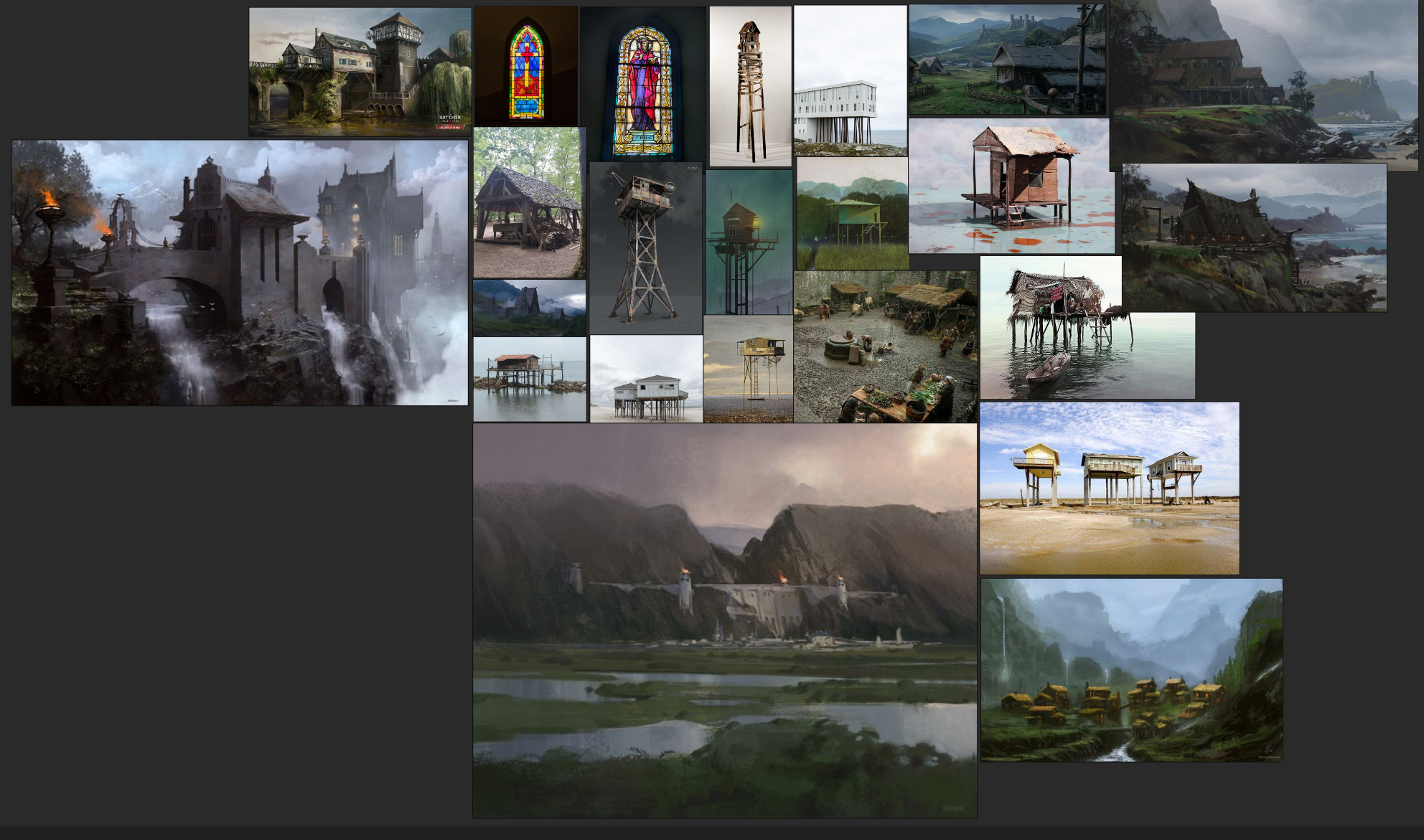


Canyon Exploration
This assignment was built around heavy use of reference material. I started by crafting the composition scene visible at the end of the level, then worked backwards.
I wanted an "evil lair" vibe, so I prioritised a building in the brutalist architecture style — inspired by an old Acid Tower found in Germany. A small town built into the canyon and mountains frames the lair and reinforces the composition.
After the composition was set, I added combat areas — each designed with composition in mind. The start of every area offers both a functional view (exits, key level landmarks) and an aesthetically satisfying one.
↓ Download Canyon Exploration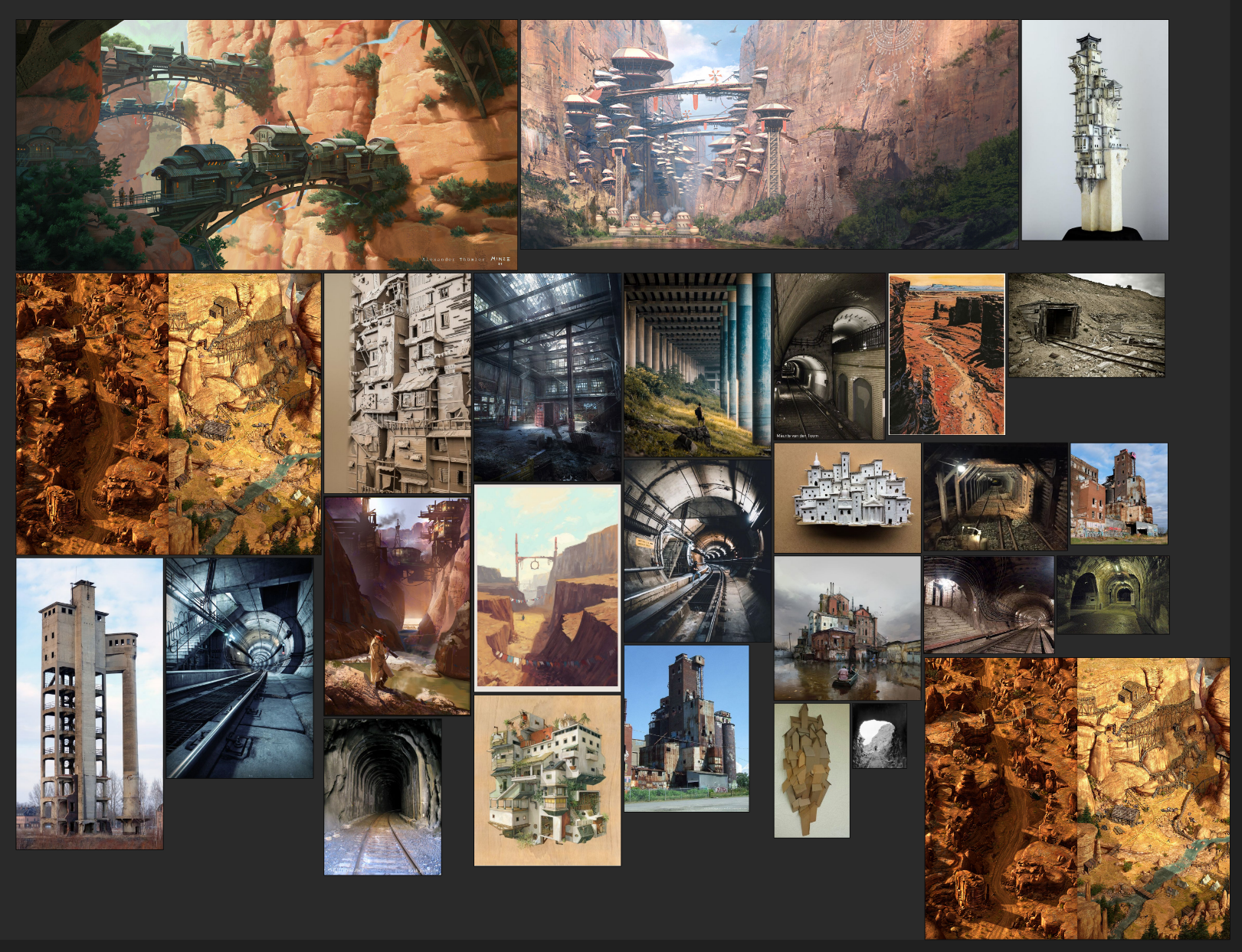


Labyrinth Exploration
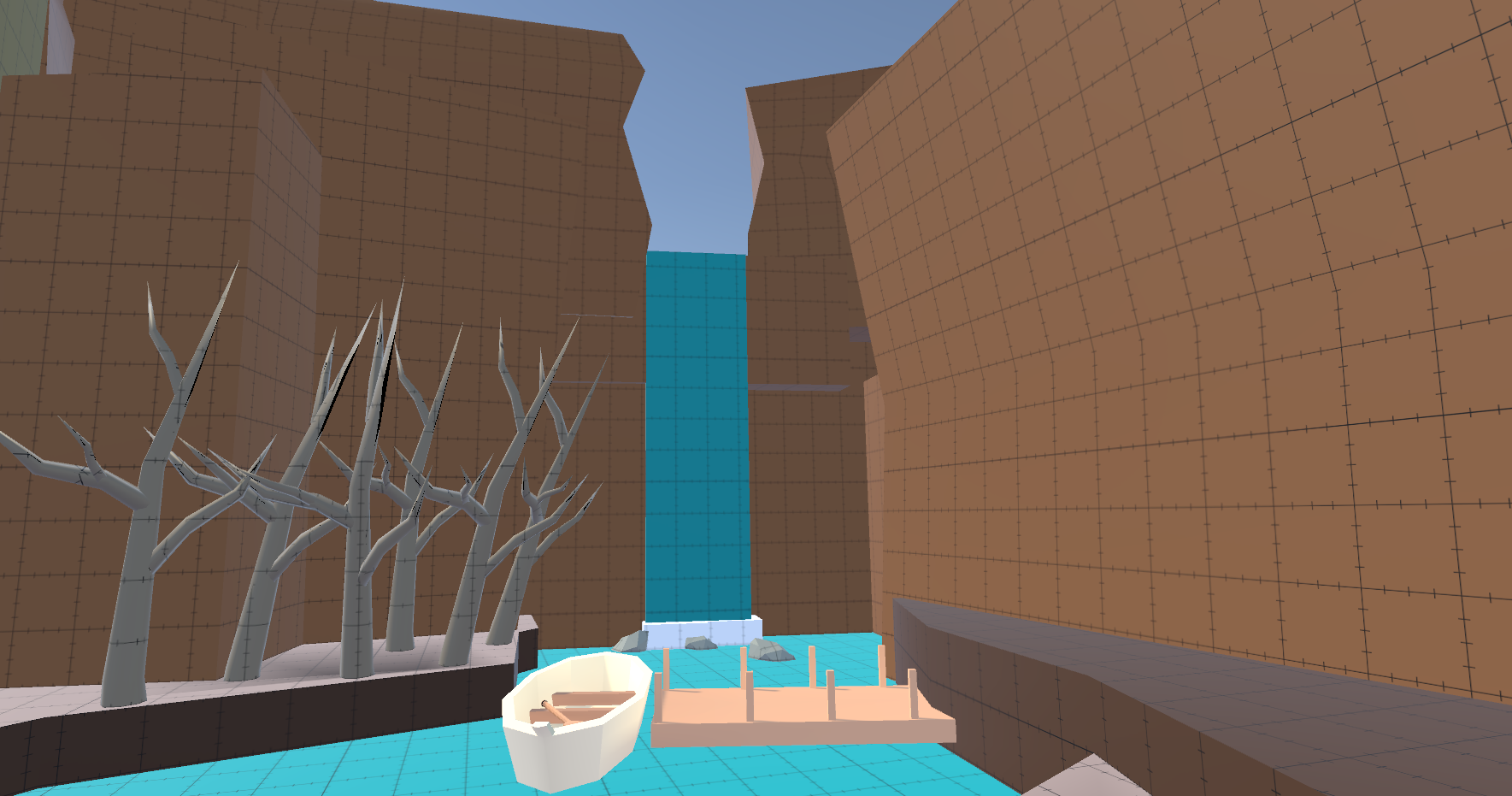
This assignment's goal was to create a labyrinth for the player. I wanted to feature a lot of dead ends and places of interest that would spark the player's curiosity.
At every decision point, I wanted the player to think: "What is beyond this?" The design includes a lot of architectural concepts deliberately chosen to provoke that feeling — inviting the player to explore rather than navigate.
↓ Download Labyrinth


